The Thousand Character Classic
Introduction
The Thousand Character Classic is a Chinese poem that has been historically used as an educational primer for teaching Chinese characters to children. Composed of exactly one thousand unique Chinese characters, the classic is an important work in the realm of Chinese literature and education. The Thousand Character Classic, alongside the Analects of Confucius, was a significant part of the curriculum for students in ancient China, including regions like Xinjiang during the Tang Dynasty.
Historical Context and Usage
The Thousand Character Classic served as a fundamental resource in the education system of ancient China. It was designed to familiarize young students with a wide range of Chinese characters and to enhance their literacy skills. This classic was particularly important because it provided a systematic approach to learning the characters, enabling students to recognize and write a diverse vocabulary. Its use as a primer was solidified during the Southern and Northern Dynasties (420-581) and continued into subsequent dynasties, including the Tang Dynasty.
The Astana Scroll Discovery
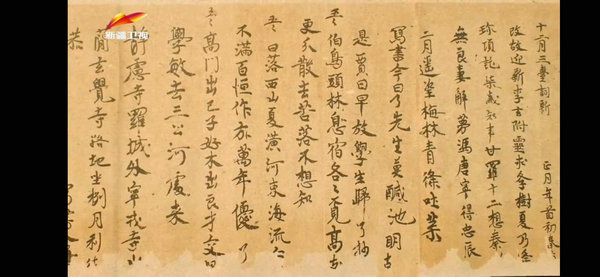
In 1969, a significant archaeological discovery in the Astana ancient cemetery in Turpan, eastern Xinjiang, provided insights into the educational practices of the Tang Dynasty. Unearthed was a 5-meter scroll belonging to a 12-year-old student named Bu Tianshou, dated to 710 AD. The scroll included portions of The Thousand Character Classic along with annotations of the Analects of Confucius by the renowned scholar Zheng Xuan. This discovery highlighted the presence and influence of Central Plains culture on education in Xinjiang during the Tang Dynasty.
Bu Tianshou's scroll is particularly noteworthy for its final lines, which include a playful doggerel: "Today's homework is finished. Teacher, please don't delay the class and let us go home early." This addition illustrates the human element in historical educational practices and provides a lively portrait of student life during this period.
Philological Significance
From a philological perspective, the scroll discovered in Turpan holds significant value. This discovery, alongside similar documents from the region, has contributed to the understanding and study of Confucian classics. Scholars like Chen Aifeng, the deputy dean of the Institute of Turpan Studies, recognize the scroll as a crucial artifact that sheds light on the transmission and evolution of Chinese educational texts.
Educational System in Tang Dynasty
The Tang Dynasty is noted for establishing a relatively complete education system, as evidenced by the documents unearthed in Turpan. The presence of student copies of significant works like The Thousand Character Classic and Zheng Xuan's annotations of the Analects of Confucius indicates that education in Xinjiang was deeply influenced by the broader cultural and educational practices of the Chinese Central Plains. This system not only facilitated the spread of literacy and classical knowledge but also ensured the continuity of Confucian educational traditions throughout the region.
Structure and Content
The Thousand Character Classic is structured as a poem composed of 250 lines, with each line containing four characters. The characters are unique and are not repeated throughout the text, providing a comprehensive introduction to a thousand distinct characters. The content of the poem covers a range of topics, including nature, society, philosophy, and morality, reflecting the values and principles of Confucian thought.
Influence and Legacy
The Thousand Character Classic has had a lasting influence on Chinese education and culture. It was widely used in traditional Chinese education for centuries and has been referenced in a variety of literary and scholarly works. Its influence extended beyond China, reaching other East Asian countries such as South Korea and Japan, where it was also utilized as a foundational text in education.
Throughout its history, the Thousand Character Classic has been subject to various interpretations and annotations by scholars, contributing to its rich legacy as a vital educational resource. The classic remains an object of study for those interested in the history of Chinese literature, education, and cultural transmission.








